
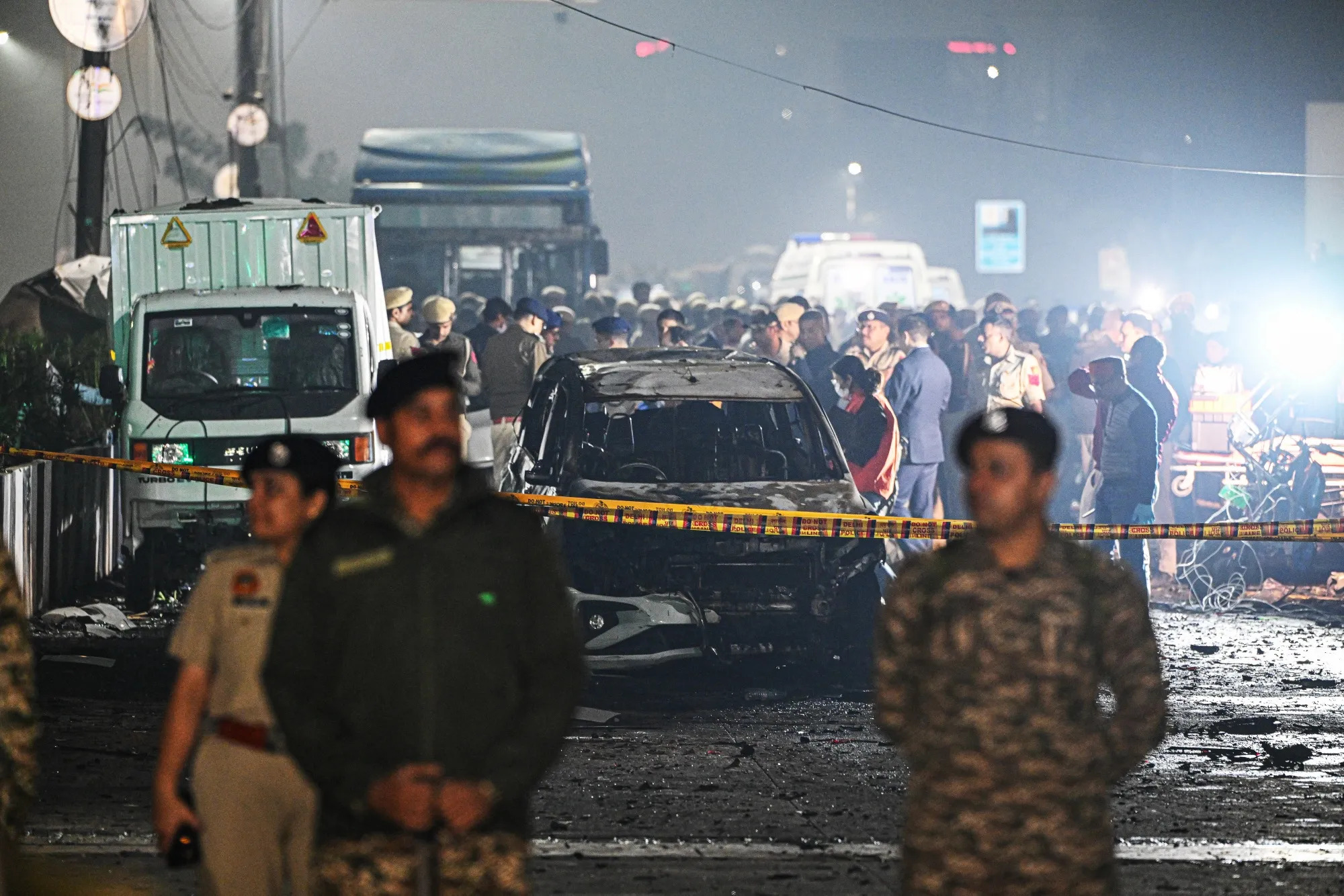
New Delhi, 11 November 2025 – A powerful explosion in the heart of India’s capital has left the nation reeling. On the evening of Monday, 10 November, a car laden with explosives detonated near the entrance of the historic Red Fort (Lal Qila) and the adjacent metro station in Old Delhi, killing at least 8 to 13 people and injuring more than 20 others.
What Happened
- The explosion occurred around 6:52 pm Indian Standard Time.
- The vehicle involved was a white Hyundai i20, which entered a parking area near the Red Fort metro station earlier in the afternoon and remained there for upwards of three hours before the blast.
- According to forensic investigators, the blast was extremely powerful, setting adjacent vehicles ablaze, scattering debris, and causing severe structural damage in the busy, congested bazaar area around Chandni Chowk.
Immediate Response & Investigation
- The Delhi Police promptly invoked the primary anti-terror statute, the Unlawful Activities (Prevention) Act (UAPA), registering sections that pertain to “terrorist acts” and “conspiracy”.
- The National Investigation Agency (NIA) has taken charge of the case, backed by Delhi Police and other forensic units.
- Prime Minister Narendra Modi, speaking from Bhutan where he is on a state visit, declared that the “conspirators behind this will not be spared”.
- Home Minister Amit Shah, along with other senior security officials, convened a high-level meeting in New Delhi to assess the situation.
Suspected Terror Network Links
- Investigations revealed that just hours earlier law enforcement in the nearby state of Haryana had uncovered a terror module in Faridabad. Nearly 2,900 kg of explosives, timers and remote controls were seized.
- According to sources, the car used in the blast is traced to a doctor from Pulwama district (south Kashmir) who is alleged to have links with a radicalised “white-collar terror” network and messaging groups on Telegram.
- Authorities are treating the blast as a probable “fidayeen” (suicide) attack a method in which attackers are prepared to die in execution of the mission.
Location & Significance
- The Red Fort is not just a tourist icon; it is also a key national symbol where the Prime Minister hoists the flag on India’s Independence Day each year.
- The explosion’s location a crowded thoroughfare near Old Delhi’s market zone adds to concerns that the attackers chose a soft target with high civilian density and symbolic value.
- Authorities have placed major transport hubs and public spaces across Delhi and neighbouring states on heightened alert; metro service at the Red Fort station has been suspended temporarily.
Casualties & Human Impact
- At least eight people have been confirmed dead; some media reports place the toll at 12 or 13.
- The injured include civilians and transport workers; forensic teams report horrifying scenes some victims were found with body parts scattered.
- Families of the missing have flooded hospitals in search of loved ones, sparking emotional outpourings and criticism of early notification systems.
Broader Implications & Geopolitical Context
- India has long accused cross-border terror networks of launching strikes from neighbouring territories. In the aftermath of this blast, India reiterated its demand at the United Nations Security Council for global enforcement of “zero-tolerance” for cross-border terrorism.
- Analysts suggest that if the terror link is confirmed, India may pursue a more aggressive posture in its counter-terror strategy including pre-emptive or retaliatory operations.
- The blast comes amid political turbulence in India (e.g., state elections) and heightened alertness in the region, potentially adding domestic security to the electoral and public-policy agenda for the government.
What Comes Next
- Forensic tests are ongoing: DNA identification of victims, analysis of explosive residues, vehicle tracking and owner history are all underway.
- Investigators are trying to map the full chain of possession of the vehicle from its original owner to the last user and uncover the planning dates, financing, and whether further attacks were planned.
- Authorities are expected to announce interim findings soon; the public and media are pressing for transparency and accountability in the security lapse.
- Meanwhile, public precaution measures are in place: landmark sites, markets, transport nodes and high-density zones in major Indian cities have bolstered checks.
Investigations are ongoing and the incident underscores the persistent threat of terrorism in India’s urban heart, as well as the broader challenge of ensuring public safety in symbolic, crowded spaces.