

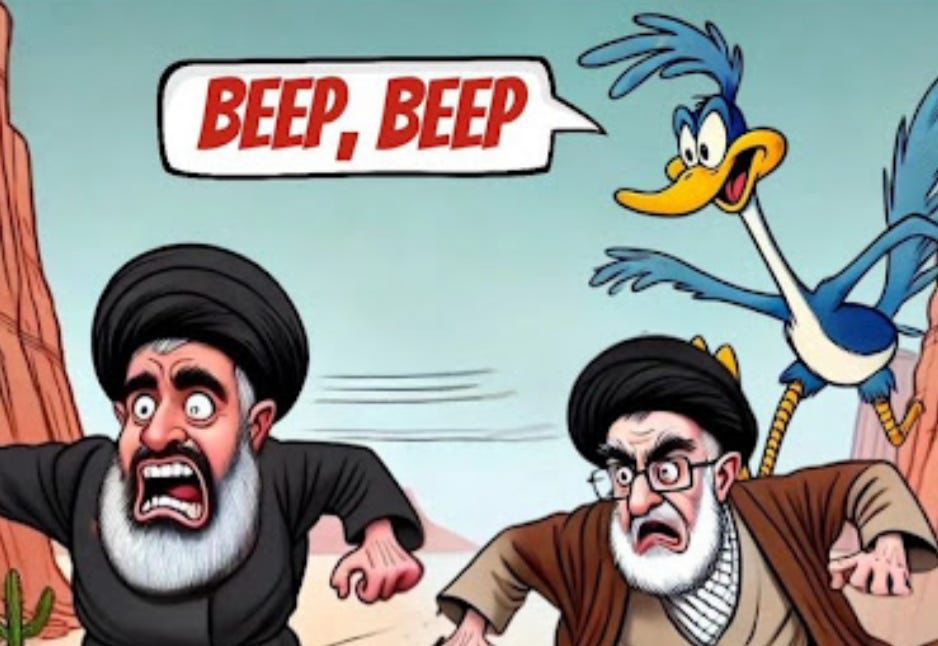
It was exactly one year ago today ( Sep 17) that the world witnessed a masterclass in counterterrorism, a operation so precise that it turned the tables on one of the most organized and modernized terrorist organizations in the Middle East. On that historic afternoon, thousands of pagers ( Old school devices meant to evade modern surveillance ) exploded simultaneously across Lebanon and parts of Syria, making devastating injuries on Hezbollah members. The next day brought more destruction. Walkie-talkies and other communication devices were detonated in a second wave. It created total collapse inside what was once called the most powerful non-state actor. The Hezbollah network saw its biggest downfall within hours. It showed how weak and powerless these organizations are when nations take matters seriously. This incident was more than just an attack; it marked a paradigm shift in the war on terror. It proved that through innovation and unpredictability, nations can make terrorists feel surprised and helpless and have nowhere to hide.
Operation Surprise ”Samuel Jackson’s Favorite Line”
“Operation Grim Beeper” (I would rename it “Operation Surprise Samuel Jackson’s Favorite Line”) was a long-running operation carried out by Israel’s Mossad and military intelligence that surgically infiltrated Hezbollah’s supply chain. Hezbollah, the Iranian-backed militant group, has long taken pride in its operational security. Concerning Israeli tracking via smartphones, Hassan Nasrallah, the group’s leader, urged members to switch to pagers as early as February 2024.
They believed low tech 90s device would shield them from cyber espionage. Little did they know that Israel had already embedded small amounts of explosives into 5,000 Taiwan-made pagers ordered through shell companies posing as legitimate suppliers. When the devices beeped with what appeared to be a routine message from Hezbollah leadership, they instead triggered explosions that killed at least 12 and wounded over 2,750 others. The second wave on September 18 targeted walkie-talkies that Hezbollah had unwittingly purchased from Israeli fronts a decade earlier, adding another 30 deaths and hundreds more injuries.
Significant number of fighters were sidelined by injuries, their communication lines severed in an instant. Hospitals in Beirut filled with casualties.
Unpreditability
Historically, terrorism thrives on ”Unpreditability” – the ability of terror organizations to conduct strike out of nowhere, blending into civilian populations and leveraging surprise as their greatest weapon. From the 1972 Munich Olympics massacre to the 9/11 attacks and October 7, terrorists have repeatedly caught nations off guard, inflicting massive damage. The Paris terrorist attack, the Mumbai attack, and Colombo Easter Sunday terror attack left nations completely helpless. It took days to figure out how terrorists infiltrated and launched attacks on their nations.
But on September 17, 2024, the script flipped. Terrorists, who once dictated the tempo of fear, found themselves defenseless, their low-tech countermeasures turned into instruments of their own deaths and destructions.
This operation is undoutadly a masterpiace of modern day warfare. It tell us the absolute necessity of specializing the war on terror through such innovative, asymmetric methods. The war on terror cannot be won with half-measures or outdated tactics; it demands specialization. Traditional warfare allowing terrorists to regroup in tunnels, urban hideouts, or sympathetic territories. The Pager Operation, however, weaponized the supply chain itself. It’s similar to the assassination of Hamas bombmaker Yahya Ayyash using a booby-trapped phone, but scaled up greatly thanks to modern intelligence and engineering. By embedding explosives in batteries and devices, Israel not only disrupted Hezbollah’s command structure but also sowed psychological terror. Every beep could now be a death knell. Drones and cyber hacks are indeed part of the modern war on terror, but supply-chain sabotage represents a new area that forces terrorists to question even their most trusted tools.
Political leadership
None of this would have been possible without strong political leadership. Prime Minister Benjamin Netanyahu and his security cabinet provided the green light, overriding potential hesitations. A bunch of paperwork and bureaucracy cannot defeat terrorism. Unpredictable, quick and fast decision making is the key. This required leaders unafraid of international backlash, willing to authorize high-risk missions. Weak or indecisive leadership, as seen in some Western responses to past terror threats, allows adversaries to fester. Strong leaders make terrorists defenseless by committing to surprise as a core principle: they plan years in advance, integrate intelligence with action, and strike when the enemy least expects it. The Pager Operation didn’t just injured bunch of terrorists. It broke spirits, paving way for afterwards strikes that killed Nasrallah on September 27 and destroyed Hezbollah’s rocket capabilities.