
The United States designated the Muslim Brotherhood branches in Egypt, Lebanon and Jordan as terrorist organizations on Tuesday, January 13, fulfilling a long-standing demand of its Arab allies and US conservatives.
Founded in Egypt in 1928, the pan-Islamist movement once spread across the Arab world, but it has been in retreat as it comes under concerted pressure from major Arab powers.
“These designations reflect the opening actions of an ongoing, sustained effort to thwart Muslim Brotherhood chapters’ violence and destabilization wherever it occurs,” Secretary of State Marco Rubio said in a statement. “The United States will use all available tools to deprive these Muslim Brotherhood chapters of the resources to engage in or support terrorism.”
The designations mean that the US will block any of the Muslim Brotherhood’s assets in the world’s largest economy and criminalize transactions with its chapters. The move also severely impedes its members’ ability to travel to the US.
Targeting links with Hamas
The Trump administration designated the groups in part based on their support for Hamas, the Palestinian armed group that the US has long classified as a terrorist organization.
The Treasury Department said that the Egyptian and Jordanian branches of the Brotherhood have both coordinated with Hamas, whose massive October 7, 2023, attack on Israel triggered an overwhelming Israeli offensive into Gaza.
In Lebanon, the State Department said that the Muslim Brotherhood, a Sunni Muslim movement, had allied itself with Hezbollah, the Iranian-backed Shiite militants, in firing rockets into Israel. The Lebanese Muslim Brotherhood has “pushed for a more formal alignment with the Hizballah-Hamas axis,” the State Department said.
Egypt hails the move
Egypt hailed the decision, which President Donald Trump had set in motion in November. The terrorist designation “reflects the danger of this group and its extremist ideology and the direct threat it poses to regional and international security and stability,” the Egyptian foreign ministry said in a statement.
Egypt, as well as US-allied monarchies Saudi Arabia and the United Arab Emirates, have long sought to suppress the Muslim Brotherhood, whose vision calls for the creation of a unified Islamic caliphate.
The movement initially rose to power in its native Egypt democratically through the 2012 election of Brotherhood-aligned candidate Mohamed Morsi, following the overthrow of longtime ruler Hosni Mubarak. Mubarak had imposed a ban on the Muslim Brotherhood, even though some of its activities were tolerated, including its network of social services.
Morsi was deposed in 2013, in a coup by then-military chief Abdel Fattah el-Sisi, who has since pursued a sweeping crackdown against the Muslim Brotherhood.
Held off out of concern for ties with Turkey
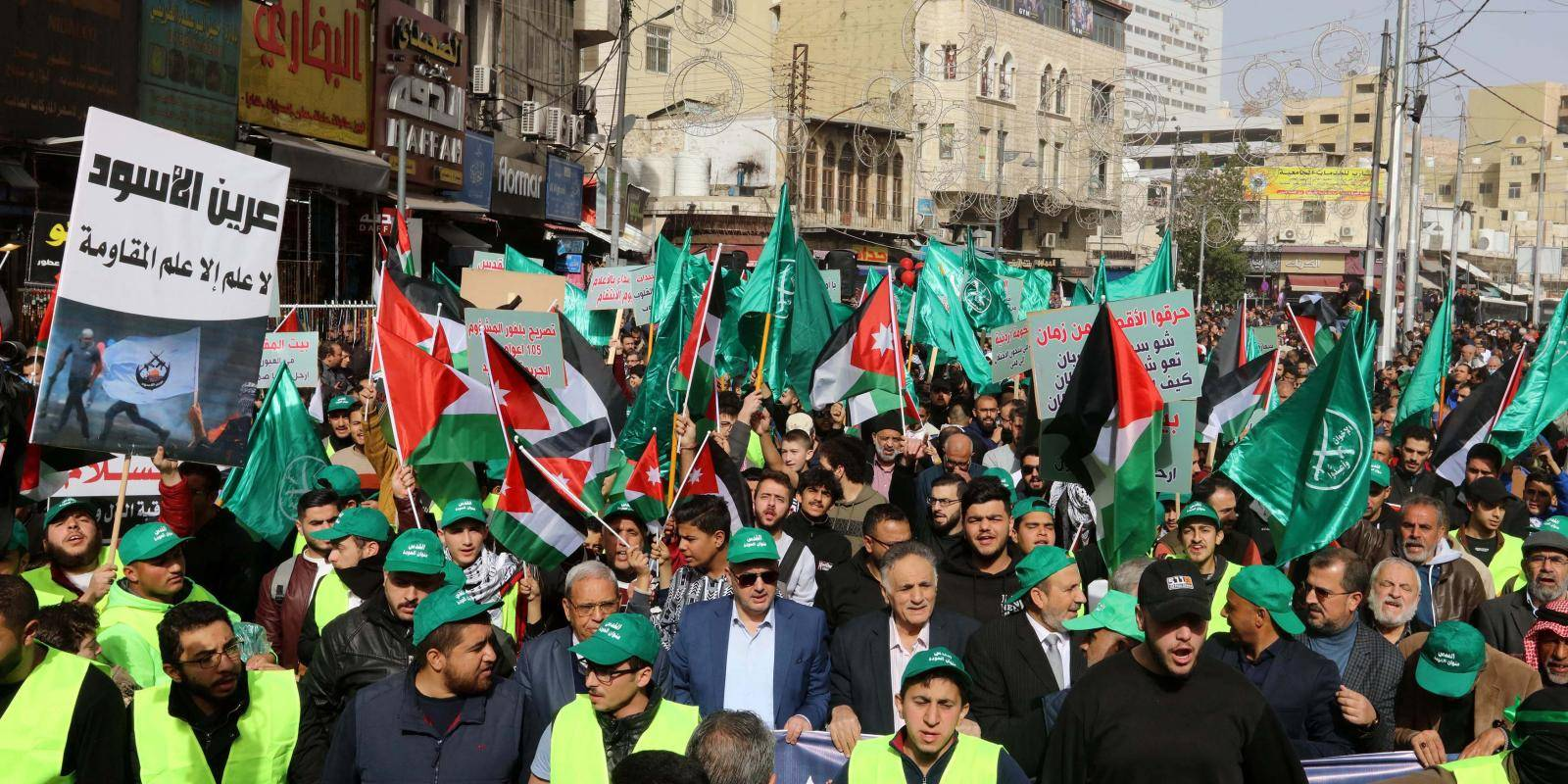
The Muslim Brotherhood had, meanwhile, gained strength in Jordan, where its political wing is the main opposition party in parliament. In April last year, Jordan banned the Muslim Brotherhood, ordering confiscation of its assets, after accusing the movement of stockpiling weapons and planning to destabilize the kingdom, which has a peace agreement with Israel.
In recent years, US conservatives have also seized upon accusing the Muslim Brotherhood, with some spreading the unfounded conspiracy theory that the organization was infiltrating the US government with the goal of imposing Islamic sharia law. Republican lawmakers have repeatedly sought a ban on the Muslim Brotherhood, hoping to cut off any financing for the movement.
The United States had initially held off on the designation in part out of concern about jeopardizing its ties with Turkey, whose president, Recep Tayyip Erdogan, has a deep and longstanding ideological affinity with the Muslim Brotherhood. Trump has a generally positive relationship with Erdogan and has also played down the Turkish leader’s fierce criticism of Israel’s offensive in Gaza.